
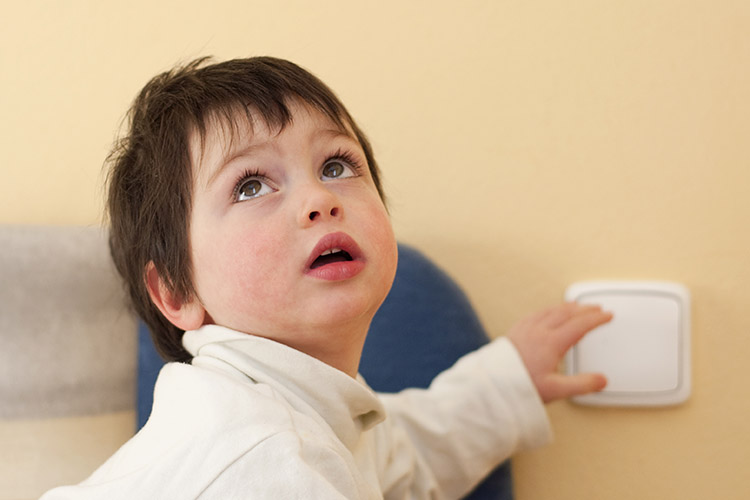
Autism Spectrum Disorder (ASD) is a disorder which is based on a collection of characteristics. Due to the nature of a “spectrum” disorder, there is varying degrees of severity and presentation of the characteristics associated with ASD. No two children with ASD are alike. Only a medical doctor or clinical psychologist can actually diagnose ASD. These professionals look for a number of diagnostic criteria to warrant the diagnosis of ASD. Many of the diagnostic criteria for ASD are related to difficulties or impairments in social skills and communication. Therefore, Speech-Language Pathologists (SLPs) have a great deal of experience in treating individuals with ASD; however, SLPs are not the professionals who diagnose it.
Autism Spectrum Disorder is an extremely complex diagnosis affecting multiple areas of development, particularly communication and social behaviour. Even highly trained professionals who have extensive experience with evaluating autism should always consult multiple sources (e.g., parents, teachers, therapists), who are associated within that child’s circle of care, to obtain a full picture of the child’s functioning in a variety of situations before making a diagnosis.
The following is a list of “typical” signs seen in infants/children with a diagnosis of ASD; however, these symptoms must not be viewed individually but rather as a group. In other words, some children who are not on the autism spectrum may exhibit some of these symptoms, and some children who are on the autism spectrum may not exhibit all of these symptoms.
There are a number of health care professionals who are involved in the treatment of autism including (but not limited to): Speech-Language Pathologists (SLP), Occupational Therapists (OT), and Applied Behaviour Analysis (ABA) therapists.
If your child has received a diagnosis of ASD, it is highly likely that he/she is demonstrating delays in the areas of speech and language development and social skills. A Speech-Language Pathologist will do a full evaluation of your child’s total communication profile: speech sound acquisition, expressive language (words in vocabulary, or nonverbal gestures used to express), receptive language (words and directions your child can understand), and social pragmatics (social interaction skills such as eye contact, attention to a task, play skills, communication intent). The Speech-Language Pathologist will then create a treatment plan consisting of goals that will improve your child’s overall communication abilities. Therapy will work in stages. Once your child achieves a goal by demonstrating that new communication skill in their everyday life, a new goal will be developed. Therapy continues in this way so your child keeps progressing.
ABA therapists use principles of learning and motivation to improve the child’s functional behaviours for home life, readiness to enter school, or other programs. ABA therapy will focus on reducing undesirable behaviours and increasing functional and socially appropriate behaviours.
Speech-Language Pathologists and ABA therapists often work together in goal setting and therapy targets in order to optimize a child’s behaviour and communication potential.

Regardless of whether your child meets the criteria for a diagnosis of ASD, a Speech-Language Pathologist can start to improve your child’s speech and language skills in therapy. During our first assessment session, we will obtain an overview of your child’s communication skills and then create a treatment plan to target the most functional communication skills first. As your child progresses in therapy we adjust his/her goals by moving up a hierarchy of communication skills.
There is much overlap in the techniques and principles used in speech therapy and behaviour therapy. ABA therapy can benefit children with ASD, but it should not be seen as a replacement therapy for speech therapy. The very heart of autism spectrum disorders is impairments in the areas of communication. Therefore, children who receive speech and language therapy early are able to maximize their communication potential and gains.
It is best to obtain a diagnosis from a professional who has extensive experience with evaluating children for ASD. Developmental paediatricians often have more experience with ASD evaluations in comparison to family physicians, as they specialize in child development versus general health.
In Ontario, there are many resources to assist children who have received a diagnosis of ASD. Many of these resources are publicly funded through your local preschool speech and language initiatives (e.g., Erinoak Kids, Kidsability) and can only be accessed WITH a diagnosis.
Early intervention for children who are delayed in speech and language is the best way to maximize their communication potential! Regardless of whether they meet the criteria for a diagnosis of ASD or not, if their speech and language skills are delayed, receiving intervention to help remediate these delays should happen as early as possible. Furthermore, there are often long wait lists for an evaluation by a developmental paediatrician, so being proactive is a benefit. You can always cancel the evaluation if your child starts to acquire their milestones and no longer shows delays.
No two children with autism are the same. There is not one therapy approach that will fit all children with ASD. The best therapists are those who tailor their therapy approach (and interaction style) to the individual child, capitalizing on that child’s strengths and being responsive to that child’s needs.
